Sending · Guide
Writing a drop-off address riders can find
A clear address and a good landmark get a parcel to the right gate first time, without a string of phone calls.

In Harare, a street name alone often isn’t enough. Some roads change name halfway along, many houses have no visible number, and in some suburbs several streets look almost the same. Riders know the city well, but they can’t see the gate you’re thinking of.
When Go-Deliver opens, you’ll add the pickup and drop-off by searching for an address or dropping a pin on the map. This guide shows how to make both easy to find.
Drop the pin in the right place
A pin is the most precise thing you can give a rider. Before you confirm, zoom in and check it’s on the right property, not just the right street.
- Put it on the gate, not the middle of the property. That’s where the rider needs to stop.
- Check large places carefully. At a school, hospital, complex or office park, put the pin at the entrance the rider should use.
- Don’t trust the first result blindly. Search results can land on the centre of a suburb or the wrong end of a long road. Move the pin if it’s not where you mean.
Write a note the rider can use
The note is where you turn a pin into a door. Good notes are short, specific and describe what the rider will actually see.
- Start with the number and street Include the house or stand number, if there is one.
- Add a landmark Something nearby that doesn’t move: a church, school, shop or petrol station.
- Describe the gate Colour, material, or anything that makes it stand out.
- Say how to get in Which entrance, which block, which floor, and who to ask for.
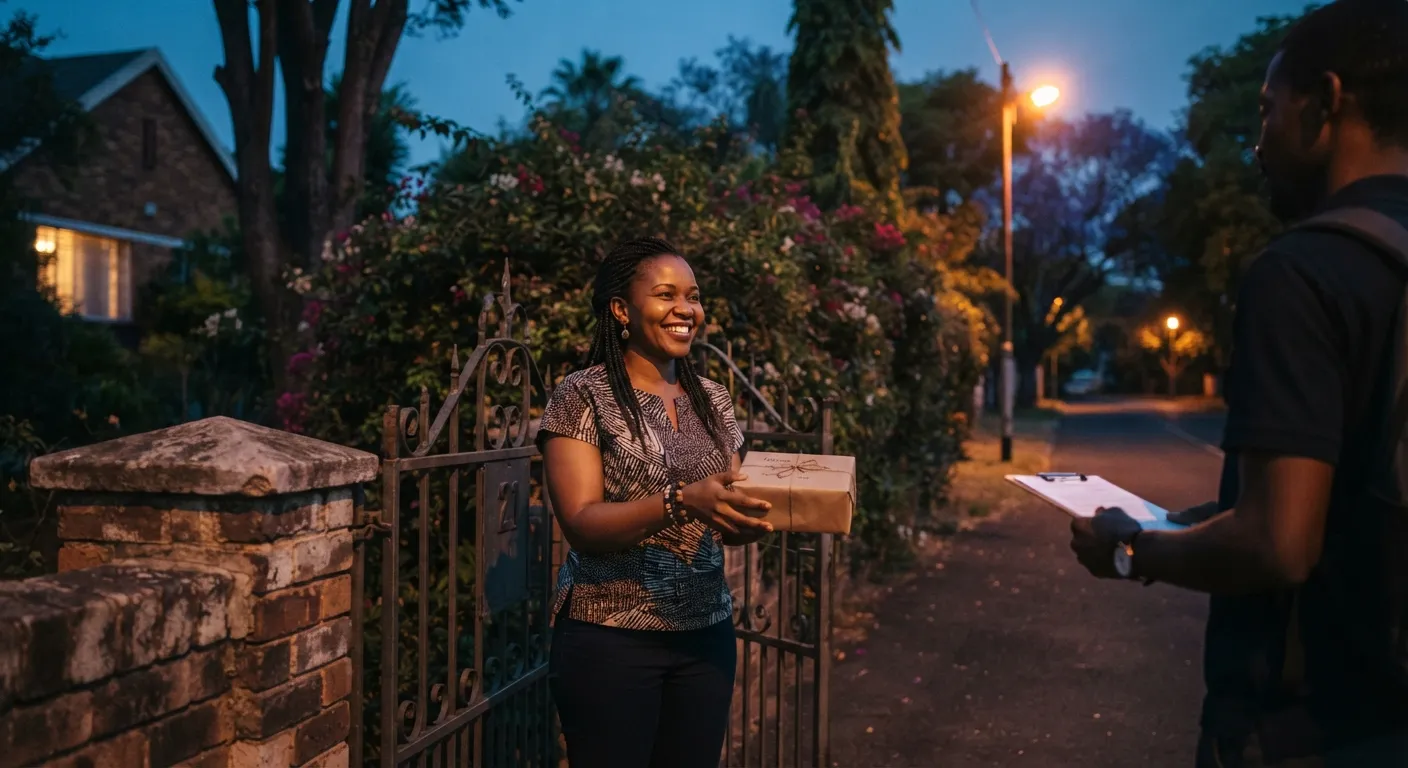
A note like “White gate with a black post box, opposite the Anglican church” is far more useful than “Near the shops”. At a complex, “Block C, flat 12, use the side gate on the right” saves the rider walking the whole property.
Good to know Avoid directions that depend on what someone already knows, like “the house where the party was” or “next to Mai Tendai’s”. Describe what a stranger would see.
Landmarks that work in Harare
The best landmarks are big, permanent and easy to spot from the road:
- Churches, schools and clinics
- Shopping centres, supermarkets and petrol stations
- Well-known roundabouts and road junctions
- Painted walls, large trees or a distinctive gate
Landmarks that don’t work as well are ones that move or change: a vendor’s stall, a parked car, “the green house” in a street where three houses are green.
The phone number matters as much as the address
Always give a phone number for the person at the drop-off, and make sure it’s on and answered. If the rider is close but can’t find the gate, a quick call fixes it. If the phone is off, the rider can only guess.
- Use the receiver’s number, not yours, unless you’ll be there to take the parcel.
- Tell the receiver a parcel is coming, so they answer a number they don’t recognise.
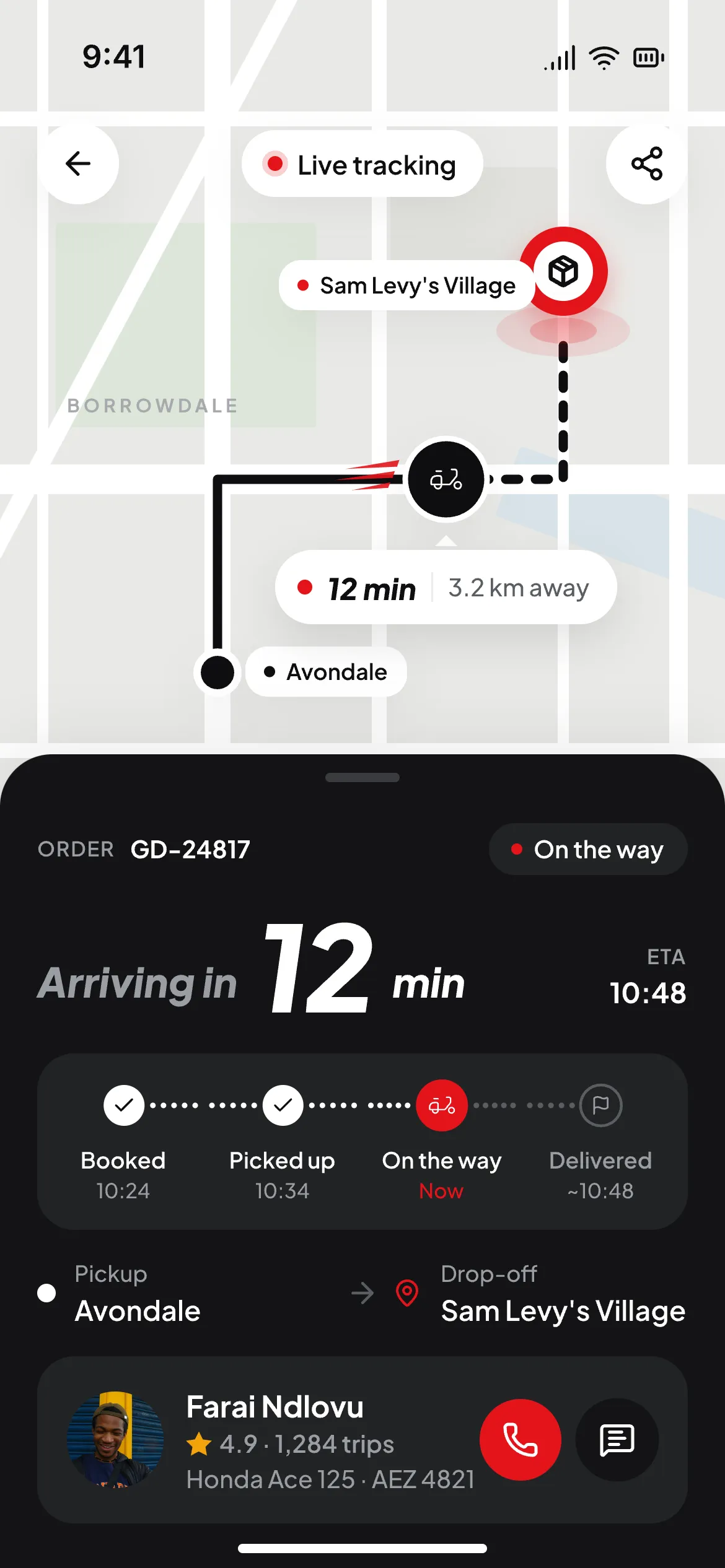
- Share the tracking link so they can see the rider getting close and be at the gate.
Gated estates, offices and complexes
If there’s a security guard, a reception desk or a boom gate, let them know a rider is coming. Add the name the parcel is for in the note, so the guard can call the right person. For offices, say whether the rider should come up or wait at reception.
Do the same for the pickup
Everything here applies to the pickup too. A rider who finds the pickup quickly gets your parcel moving sooner. Add a landmark and gate details, and keep your phone on until the parcel has been collected.
Before you confirm
Read the addresses back once. Check the pin, the note and the phone number. It takes a few seconds, and it’s the easiest way to make sure your parcel goes to the right place. Our guide on how to send a parcel in Harare covers the rest of the booking.
Be first to send
Go-Deliver is launching in Harare soon. Join the waitlist and we’ll let you know when you can book.